


Paintings bring drawings to life and each drawing is an idea. I love awakening the thoughts and pictures I have in my mind. Read below to learn more.
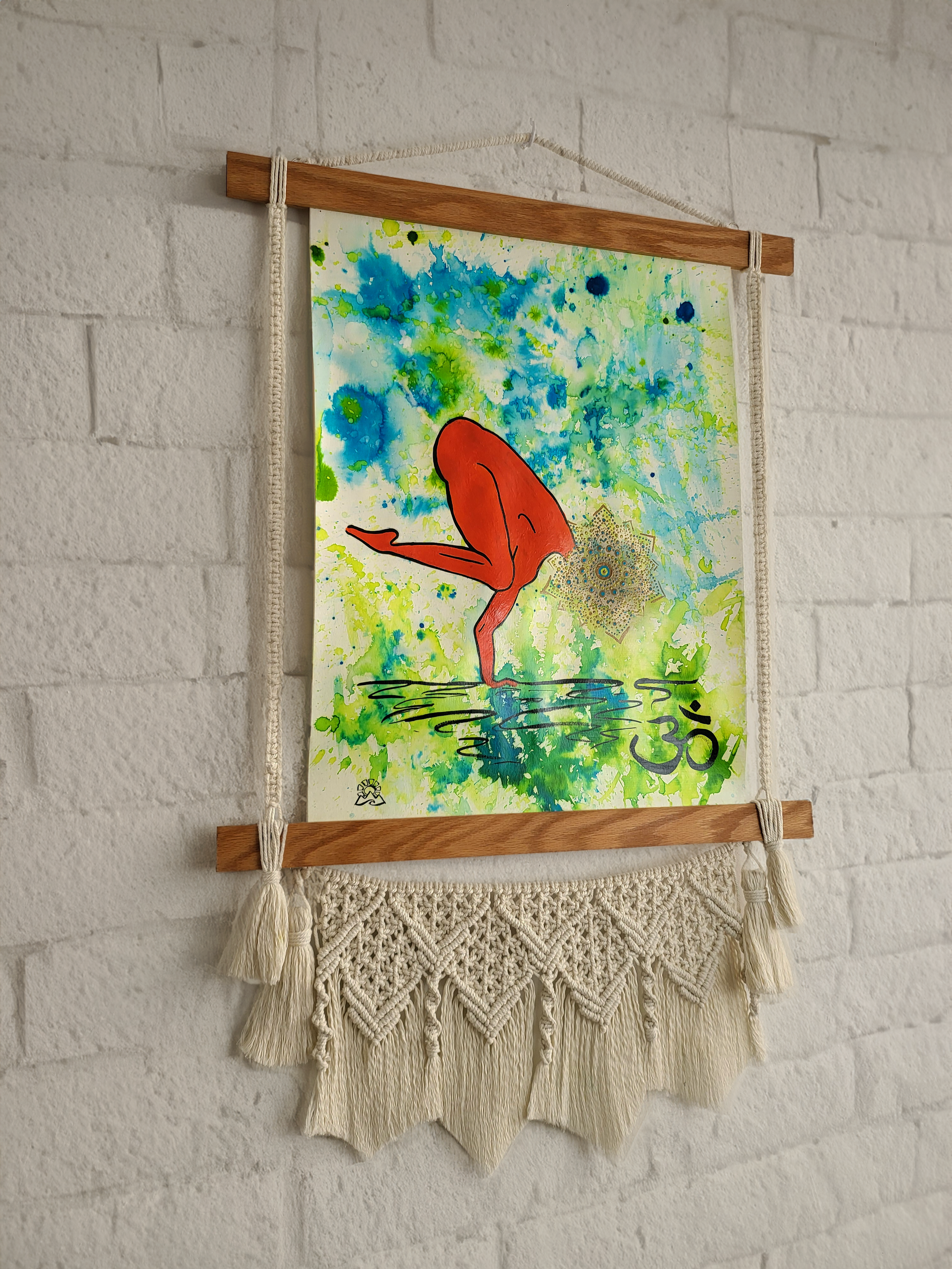
A well-known myth associated with crows comes from the story of Sage Valmiki, the author of the Ramayana. Legend has it that Valmiki, who was once a dacoit (robber) named Ratnakar, saw a crow pecking at grains. This act of the crow reminded him of his struggles and his greed. Observing the crow’s persistence led Valmiki to reflect deeply on his actions and find a new path toward wisdom and enlightenment. This transformative moment inspired him to begin his spiritual journey.

Tittibhasanas roots are in Indian mythology, where many yoga poses are inspired by animals, nature, or mythological stories. There is no ancient tale directly associated with Tittibhasana. Instead, this pose is often seen as representing qualities of the firefly—light, agility, and illumination in the dark. These qualities hold symbolic meaning within yoga practice. In yoga, the firefly represents: 1. Illumination and Wisdom: Just as fireflies light up their surroundings, this pose symbolizes the light of knowledge, illuminating our inner world and guiding us through challenges. 2. Agility and Strength: The firefly’s delicate appearance belies its strength, much like Tittibhasana, which requires both finesse and power. 3. Overcoming Darkness or Challenges: Fireflies are known for their unique ability to shine in darkness, symbolizing how we can use inner strength to find clarity and resilience through challenging times—just as Tittibhasana challenges both body and mind.
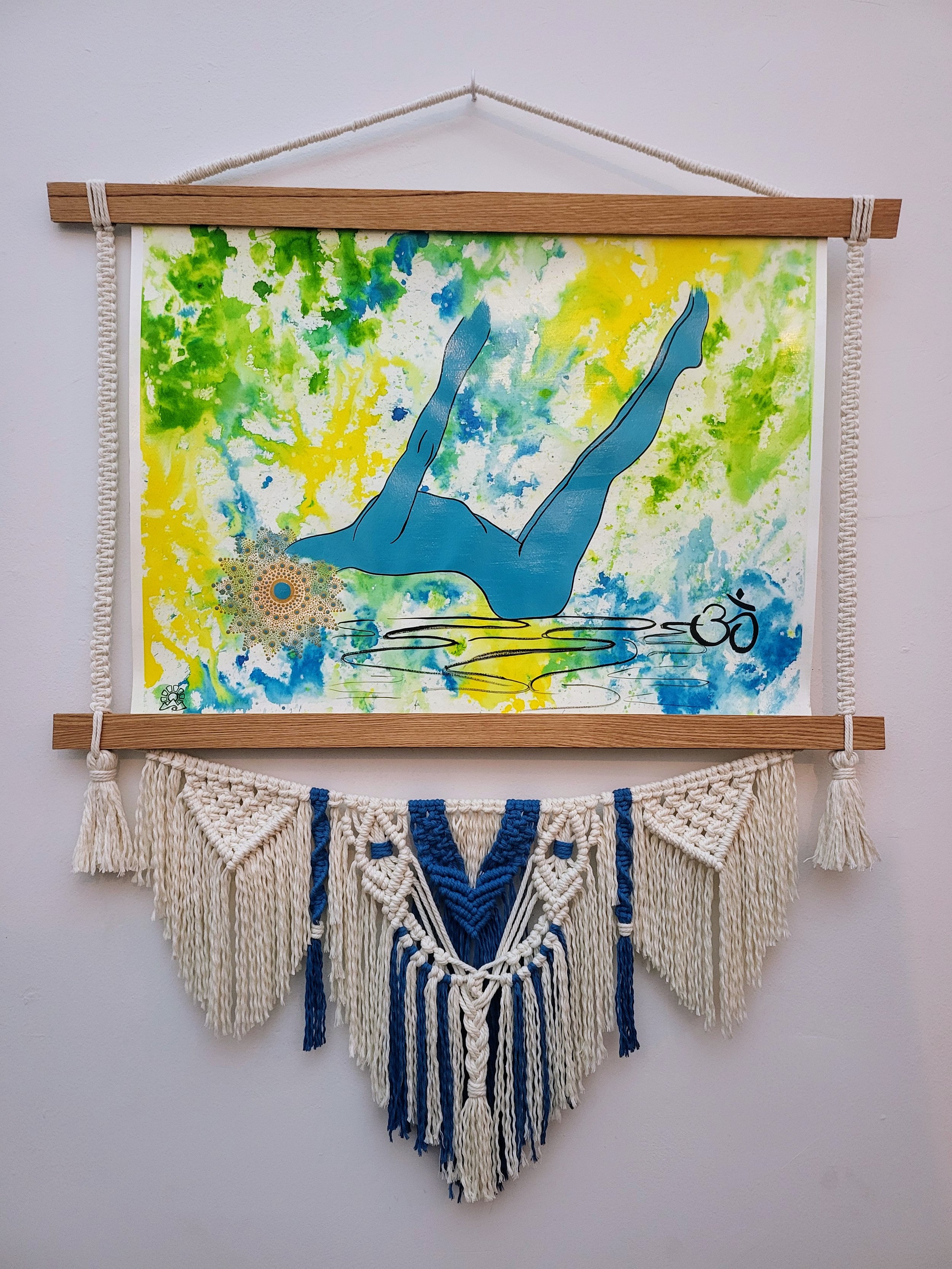
Matsyasana is named after the fish avatar of Lord Vishnu, who is said to have saved sacred knowledge and humanity from a great flood in Hindu mythology. This pose opens the chest (heart chakra), symbolizing love, compassion, and emotional release. It encourages practitioners to let go of emotional blockages and embrace openness. By stretching the neck and throat (throat chakra), Matsyasana helps clear communication pathways and promotes self-expression and truthfulness. Matsyasana symbolizes spiritual awakening, emotional release, and the preservation of inner wisdom, blending physical practice with deeper spiritual understanding.
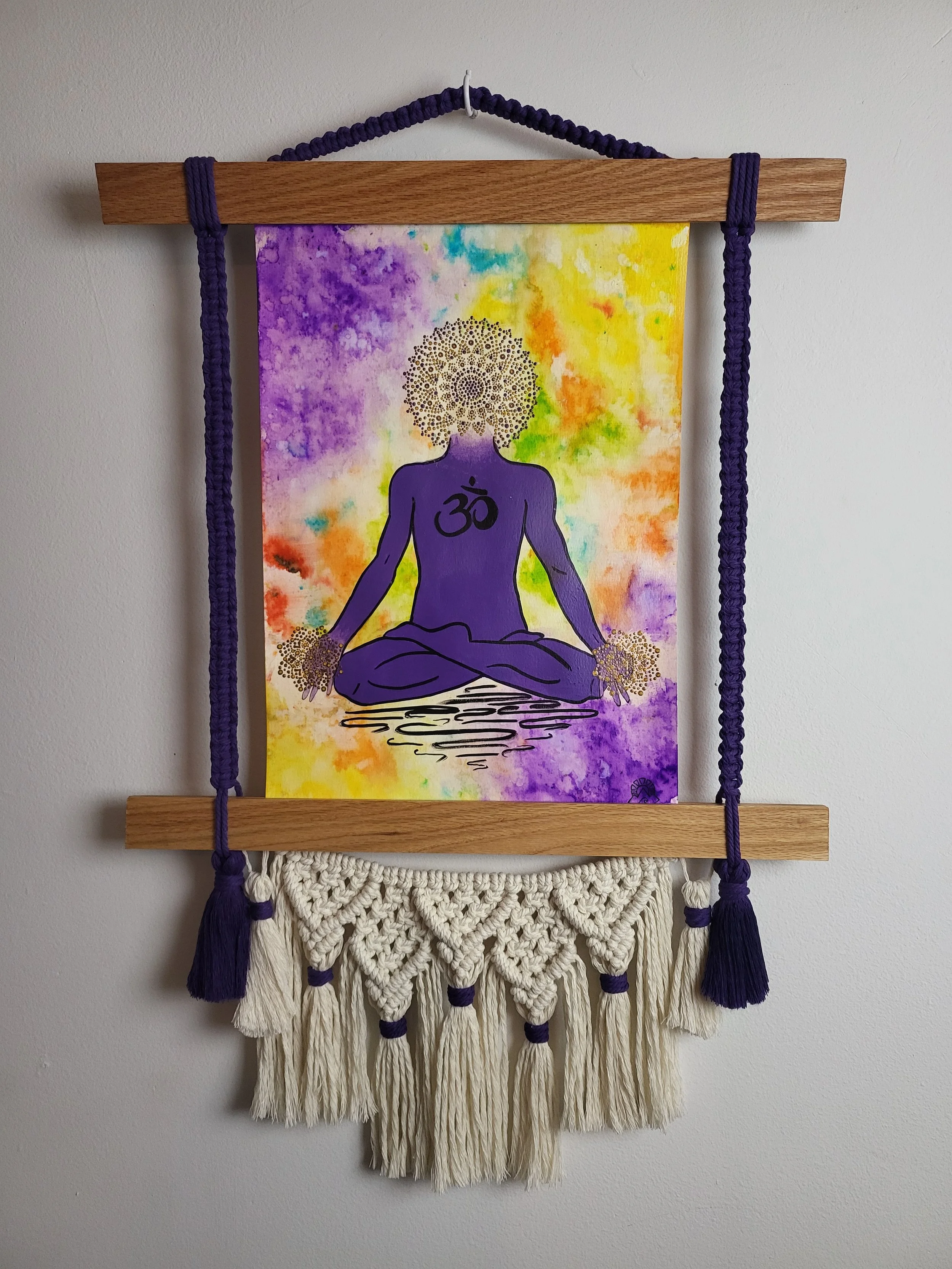
Seated in lotus, the meditator dissolves into stillness. The head replaced by a gold dot-work mandala, the thousand-petaled lotus of the crown chakra in full bloom. Om, the primordial sound of the universe, rests at the heart, while gold mandalas radiate from open palms: energy received, energy given. The watercolor wash of purple, gold, and rainbow hues is the aura of deep meditation, every chakra alight at once. Each hand-tied macrame knot represents the granthis. The psychic knots of Brahma, Vishnu, and Rudra that bind us to attachment, ego, and illusion. Through practice, they loosen, freeing energy to rise to the crown. Framed in oak with deep purple tassels.
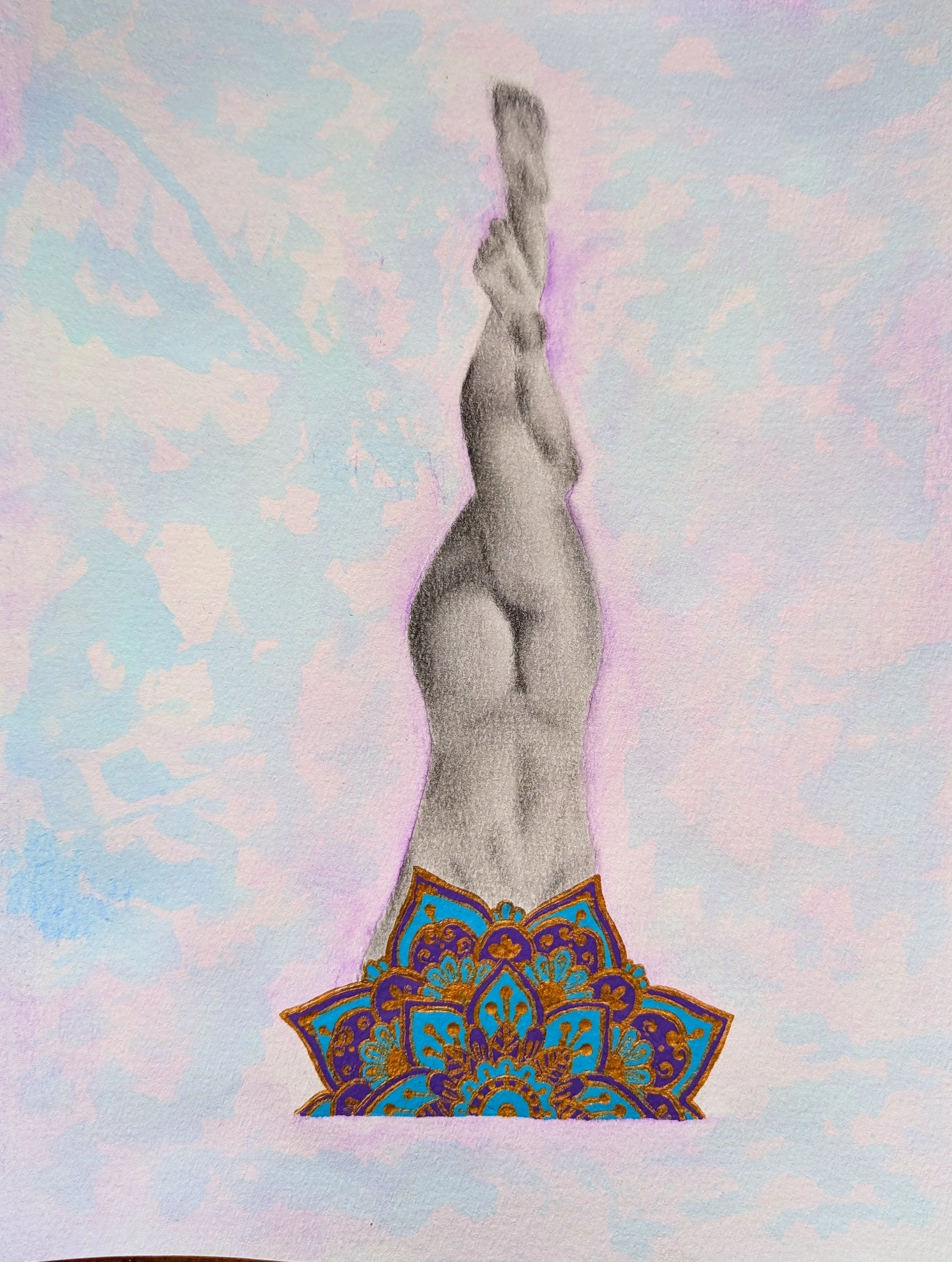
Called the king of asanas, Sirsasana turns the world upside down to see it clearly. In yogic tradition, resting on the crown of the head awakens Sahasrara, the crown chakra. The seat of consciousness where the self dissolves into something greater. Here, the head disappears into a blooming mandala of turquoise, violet, and gold. The thousand-petaled lotus of awakening. The dreamlike wash of pink and blue is the space between waking and dreaming, where inversion carries us. A violet aura traces the body: energy rising, or rather descending, to the crown. An invitation to flip your perspective, and find stillness there.
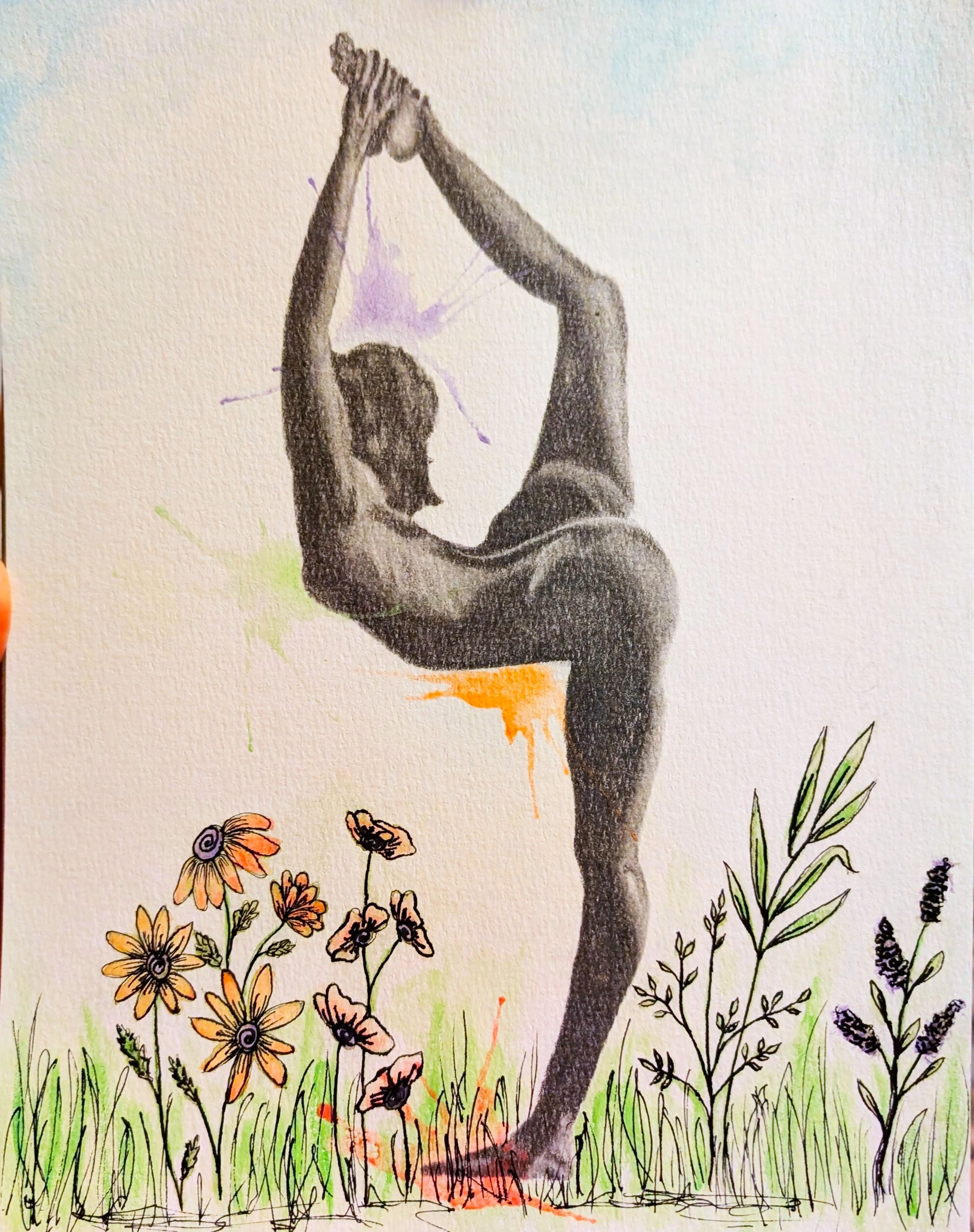
Natarajasana honors the cosmic dance that creates, sustains, and renews the universe. A rhythm alive in every one of us. Destruction always makes way for rebirth. Here, the dancer rises from a meadow of wildflowers, rooted yet reaching, the human spirit in motion. The splashes of color along the body are chakras awakening: red at the foot, grounding to the earth; orange at the sacral center of creativity; green at the heart; violet at the crown, opening to spirit. A reminder that balance isn't stillness. It's a dance.